
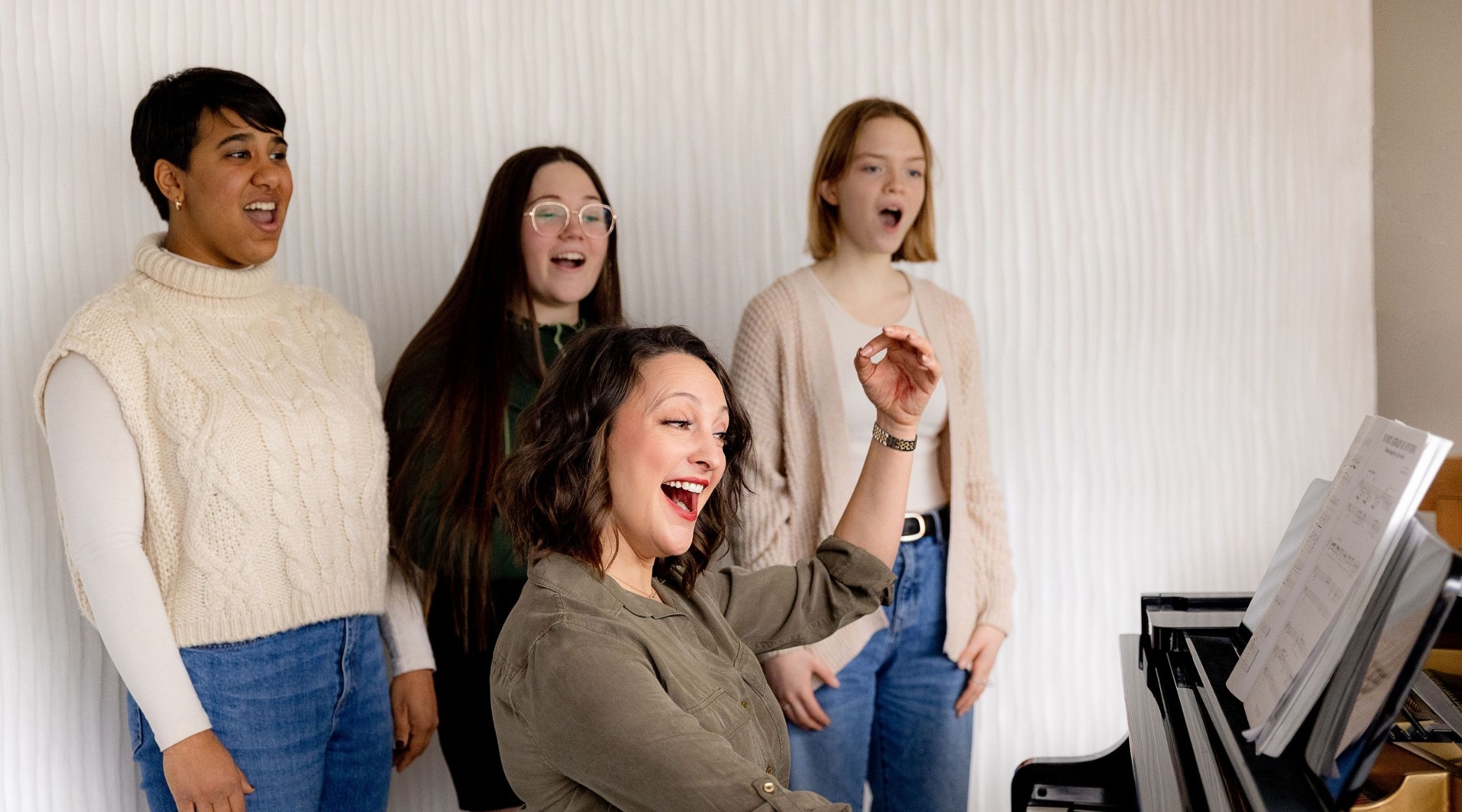
Where do you start with singing lessons?
Support for every stage of learning
Every singer arrives somewhere different, and no two journeys look alike. Here is how a singing journey at SAM tends to unfold.
|
1
Stage one
Beginning the Journey
No previous experience is required. New singers get comfortable with their own voice while building pitch, listening skills, and sustainable vocal habits, whether they start in a group class alongside other beginners or one on one with a teacher. |
1
|
|
|
2
|
2
Stage two
Developing Your Skills
Continuing singers build on those foundations as their confidence grows. They refine technique, widen their repertoire across styles, and develop the musicianship behind the singing: score reading, counting, rhythm, ear training, and part singing. This is also where students prepare for exams, festivals, or performances, if those are goals they want to pursue. |
|
|
3
Stage three
Deepening Your Artistry
Experienced singers have the technique and the curiosity to make music their own. They pursue deeper interpretation, stylistic versatility, and expressive choices. They may also take on ensemble singing, exams and festivals, community performances, and the chance to collaborate with other musicians. |
3
|
Singing lessons at SAM
At Squamish Academy of Music, we believe singing is about much more than learning to reproduce a melody or make a bigger sound. Our approach combines healthy, sustainable vocal development with strong musicianship, stylistic versatility, and expressive communication. Students explore a range of musical styles because each style offers different possibilities for the voice. They learn why an Italian aria calls for different choices than a contemporary pop song, and how elements such as resonance, tone, articulation, phrasing, and amplification shape the sound. At SAM, singers learn to think like musicians, while creatively exploring their personal sound.
Technique in service of expression
Students develop tone, colour, dynamics, phrasing, and articulation as tools for communication, explore the meaning of both text and music to support thoughtful interpretation, and learn to make intentional artistic choices.
Musicianship alongside vocal technique
Students develop the skills to understand and think about music: reading a score, counting, rhythm, ear training, and recognizing melodic patterns. Scales, arpeggios, and other exercises strengthen pitch awareness and establish a tonal centre.
Sustainable vocal development
Vocal technique is developed to help students understand what is reasonable and sustainable for a developing voice, and focusing on quality, control, and sustainability of sound, not simply volume.
Exploring the voice through different styles
Guided by student interest, singers develop versatility by exploring classical, musical theatre, contemporary, and other vocal styles, learning how resonance, tone, articulation, breath, and amplification change between them.
Collaboration and connection through singing
Harmony, part singing, listening, and ensemble skills are developed through choirs and vocal ensembles, creating opportunities to sing with and learn from other musicians. Collaborative music making builds musicianship, confidence, communication, and connection.
Performance goals as a learning pathway
Individual goals are set through opportunities such as exams, festivals, theatre, and studio performances. These opportunities help students discover their own musical interests while developing confidence and independence.
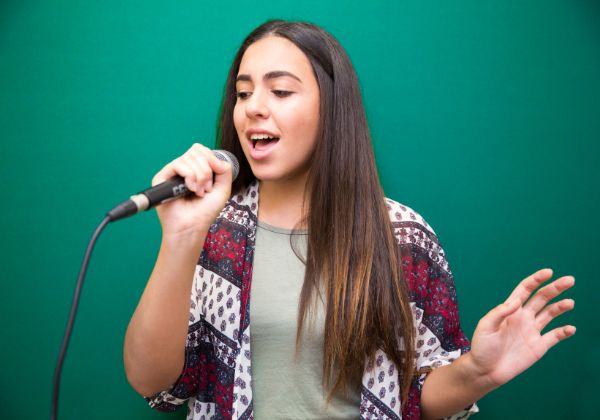
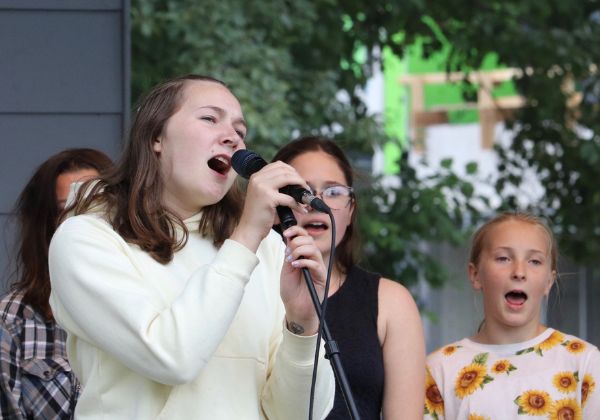
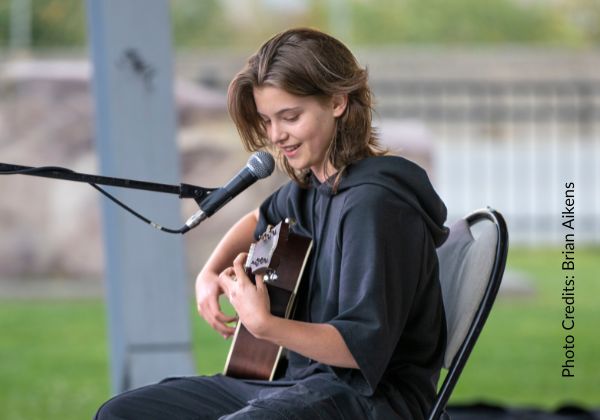
Our voice teachers and vocal coaches
We believe that great singing teachers do more than teach songs and basic technique. They help students develop sustainable voices, build musicianship, grow in confidence, and discover the joy and expressiveness of singing.
Our singing instructors are skilled musicians, vocal coaches and educators with strong technical foundations and a passion for teaching. They bring experience working with students of different ages, abilities, voices, and musical interests, whether a student loves singing for fun, wants to perform musical theatre, hopes to explore contemporary or classical repertoire, is preparing for exams or festivals, or is pursuing advanced musical study. Through a thoughtful and individualized approach, our teachers help each singer develop their voice while discovering how to use it expressively across a variety of musical styles.
We seek voice teachers who
- Demonstrate strong proficiency as singers and a solid understanding of music theory, technique, and musicianship
- Are comfortable teaching across classical, musical theatre, and contemporary styles, and can explain how resonance, breath, and articulation change between them
- Adapt lessons to meet each student’s goals, interests, and learning style
- Balance technical development with creativity, self expression, and enjoyment
- Communicate clearly and professionally with students, families, and colleagues
- Foster confidence, independence, and a lifelong appreciation for music
- Value collaboration, community, and personal connection
- Believe that musical growth is possible for every student
- Contribute positively to our welcoming and supportive academy culture
Private lessons or group classes?

Individualized attention, built around your goals and your pace. Especially helpful if you want focused technical development, plenty of solo singing, or support building confidence in a comfortable setting.

One of the best ways to develop pitch, musicianship, and listening skills, with opportunities to sing harmony, build foundational technique, and develop stage presence. And, of course, singing with others is fun.
Student journeys
Every student’s path looks a little different. Here are two ways a voice journey at SAM can unfold.
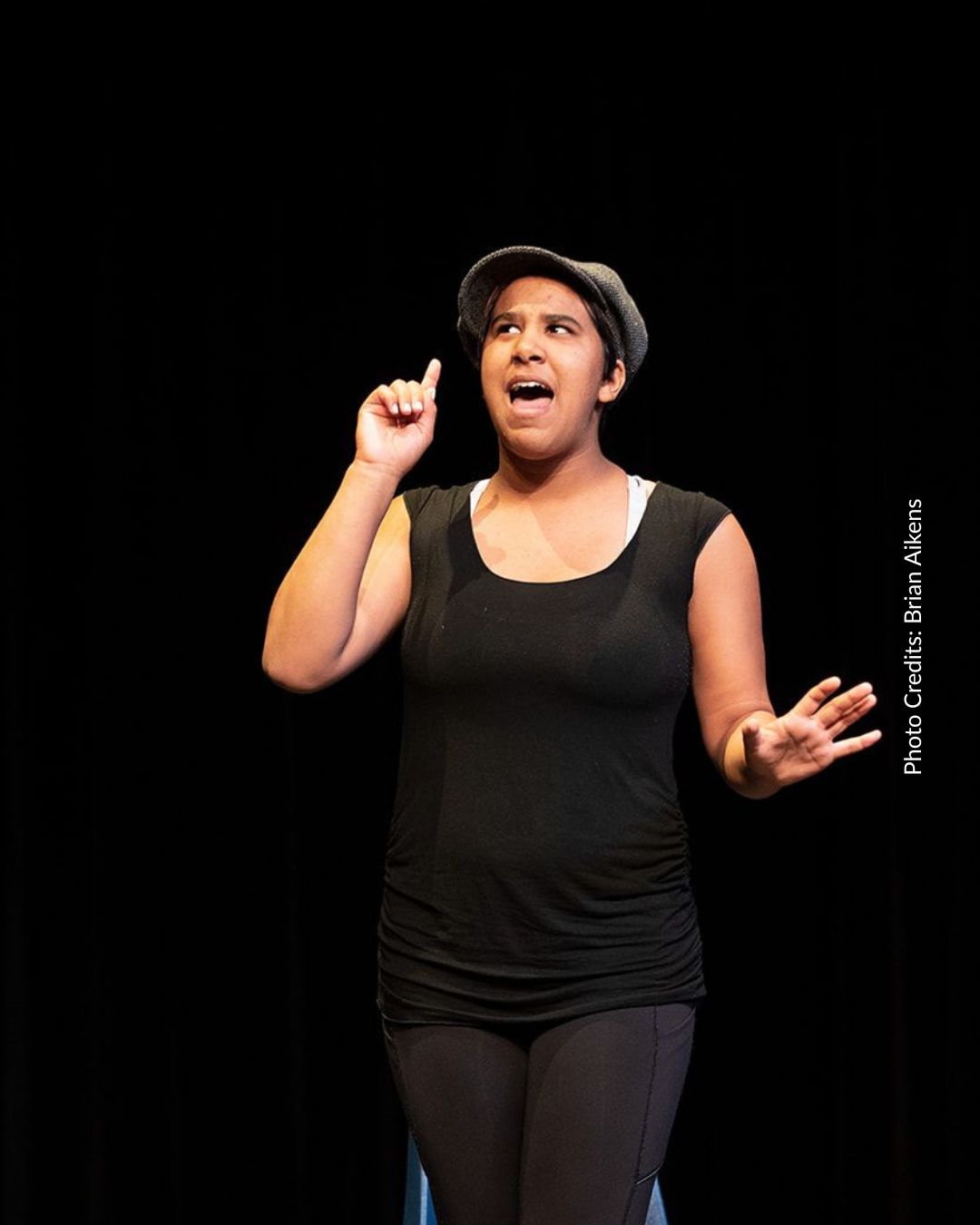
Lucy
Lucy, from musical theatre to a Bachelor of Music
Joined through weekly musical theatre classes, where her interest and ability as a singer quickly led her toward private voice lessons.
Today
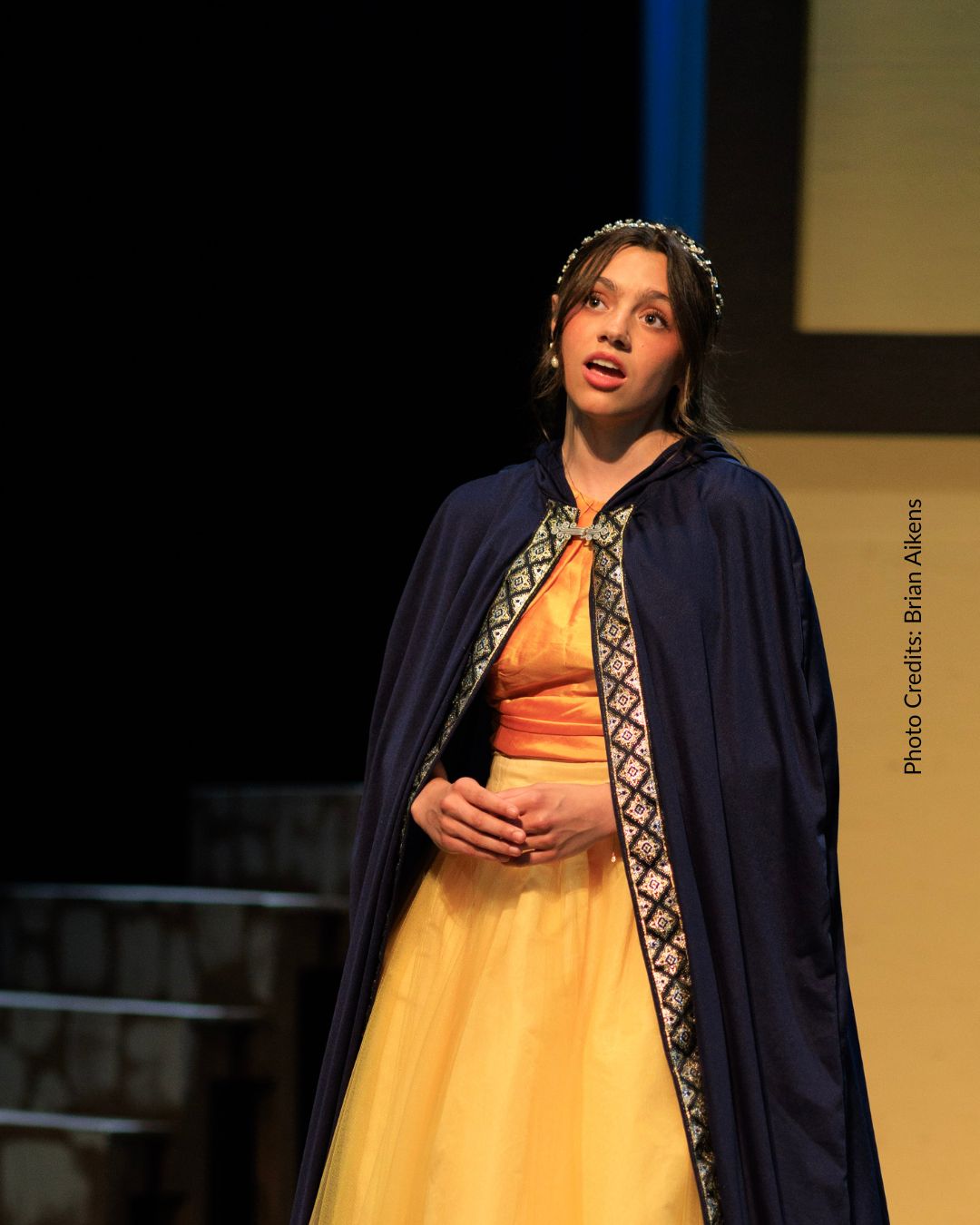
Lia
Lia, from preschool music to student teacher
Joined as a preschooler, participating in song, rhythm, and movement classes for young children.
Today
Singing Lesson Pricing & Registration
Voice lesson fees vary by lesson format and program. Students can choose from private lessons, group classes, choirs, ensembles, and seasonal programs when available. Bursary support is available for eligible families through the Community Access Music Project Society, and our team can walk you through the application.
For current fees and lesson details, visit our Private Lessons page or contact the SAM office in Downtown Squamish.
Whether you are looking for classical vocal lessons, musical theatre coaching, or contemporary technique, we can help you find the right fit.
Singing lesson FAQs
What makes singing lessons at SAM different?+–
Singing at SAM is about more than a weekly lesson. Our voice teachers are skilled musicians and vocal educators who build each student’s technique with the long term health of their voice in mind, alongside the musicianship to understand what they are singing. Lessons are structured around where a singer is now and where they want to go, whether that is exams, festivals, musical theatre, ensemble singing, or simply becoming a more confident singer. And students learn inside a supportive music community, where curiosity, collaboration, and confidence are part of the experience.
Who teaches singing at SAM?+–
Voice students at SAM learn with Melissa Braun and our team, all experienced singers and vocal educators with a genuine passion for teaching. They work with students of different ages, abilities, voices, and musical interests, and help each singer develop their voice while discovering how to use it expressively across a variety of musical styles.
What styles do your voice instructors teach?+–
Our voice instructors work across a wide range of styles including contemporary styles, classical styles, jazz, and musical theatre. While each instructor brings their own strengths and experience, all are comfortable teaching in multiple styles and adapting to student interests. We recommend speaking with our admin team so we can help match you with an instructor whose experience best aligns with what you’d like to explore.
Can I study voice using the Royal Conservatory of Music (RCM) or other exam curriculums at SAM?+–
Yes. Our voice teachers have extensive experience preparing students for voice exams using the RCM curriculum. Students are able to study classical voice using the RCM curriculum and methodology. Students may also pursue classical voice or contemporary idioms accreditation through Conservatory Canada.
While instructor availability may vary depending on staffing, we actively work to ensure we have qualified teachers on staff who can support RCM classical training and Conservatory Canada contemporary training. We recommend speaking with our admin team so we can confirm current availability and match you with the right instructor.
Is a group or private lesson better for me?+–
Both offer valuable ways to develop as a singer. Group singing is one of the best ways to develop pitch, musicianship, and listening skills, while also providing opportunities to sing harmony, build foundational vocal technique, and develop stage presence. And, of course, singing with others is fun. Private lessons provide more individualized attention and can be especially helpful for students who want focused technical development, lots of solo singing opportunities, or support building confidence in a more comfortable setting. A student who loves being part of a group may thrive in ensemble singing for years, while someone who is eager for the spotlight, or feels more comfortable working one on one, may benefit from private lessons sooner. For some students, the combination of group and private singing provides the best of both worlds.
What age do you recommend starting singing lessons?+–
We believe you can start exploring your voice at any age. At SAM, our youngest singers begin in group classes that incorporate music, movement, games, and playful exploration. Toddlers and young children generally thrive in this collaborative environment, and many students continue singing in groups from their early years through ages 12 to 14 and beyond. For students who are ready for more individualized instruction, private voice lessons are typically a great fit starting around ages 7 to 9. Adults are always welcome in our adult ensembles and private lessons.
Is it okay if I’ve never sung before?+–
Yes. Whether you’ve been training for years, singing karaoke at home, or have been nervous to sing at all, your instructor will work with you to find appropriate goals that will encourage you to grow while having a great time. Everyone can improve their singing voice through exercises to improve coordination and develop their ear.
What will my first singing lesson be like?+–
Your first lesson is a chance for you and your instructor to get to know each other and for your teacher to learn about your goals, interests, and experience. You’ll try some comfortable vocal exercises and may sing through a familiar song or two. Remember, this isn’t a performance or an audition and you don’t need to arrive with any particular level of vocal ability.
Your instructor will begin introducing you to some foundational concepts, and may choose one or two songs that you can begin exploring in your upcoming lessons. As you get to know your voice and your goals, your instructor will tailor your lessons and repertoire to support your individual musical journey.
Can I learn to sing and play an instrument at the same time, or write my own songs?+–
Absolutely. Many students want to develop their voice while learning to accompany themselves on guitar or piano, whether they’re interested in performing well known songs or writing and performing their own music. Lessons can support the coordination of singing and playing while developing strong instrumental technique, musical understanding, and an awareness of how chords and melody work together. Many students choose to work with both a voice instructor and a guitar or piano instructor, allowing them to develop their skills in a coordinated way. Let our admin team know if singing and playing, songwriting, or both are your goals, and we’ll help match you with the right teachers.
Are there performance or collaboration opportunities?+–
Yes. Singers have at least two opportunities each year to perform and share their work. Depending on interest, students may also collaborate with other musicians, take part in ensembles and choirs, prepare for festivals, and learn alongside their peers.
Do I need any learning materials?+–
Singers typically work from sheet music. Your teacher will recommend and help source any books or print materials you need.
What should I bring to my singing lesson?+–
Bring any music book you’re currently working with. Your teacher may suggest additional music books or print music, which can be purchased independently or ordered through SAM, and may also recommend a notebook, pencil, or tuner. If you would like to incorporate an instrument such as ukulele, guitar, bass, or violin, bring it with you, as these instruments are not provided by SAM.
How much do singing lessons cost?+–
Voice lesson fees vary by format and program. For private lesson fees and availability, visit our Private Lessons page. For group class, choir, and ensemble pricing, each program is listed with its own fee on our Programs page. You are also welcome to contact the SAM office, and we will walk you through the options.
Does SAM offer bursaries or financial support?+–
Yes. Squamish Academy of Music partners with the Community Access Music Project Society to provide bursary support for eligible families. Our admin staff can point you in the right direction.
How do I find current singing lesson availability?+–
Availability, schedules, and group programs change through the year. Our Programs & Lessons page lists everything currently running, with times, ages, and instructors. If you cannot find a fit, contact the SAM office and we will help you find a lesson time or class that works.

